
Your iPhone becomes an AI microphone: it removes the background noise around you and streams crystal-clear speech straight to your AirPods or hearing aids — live, as people speak.

Works with AirPods and compatible hearing aids.
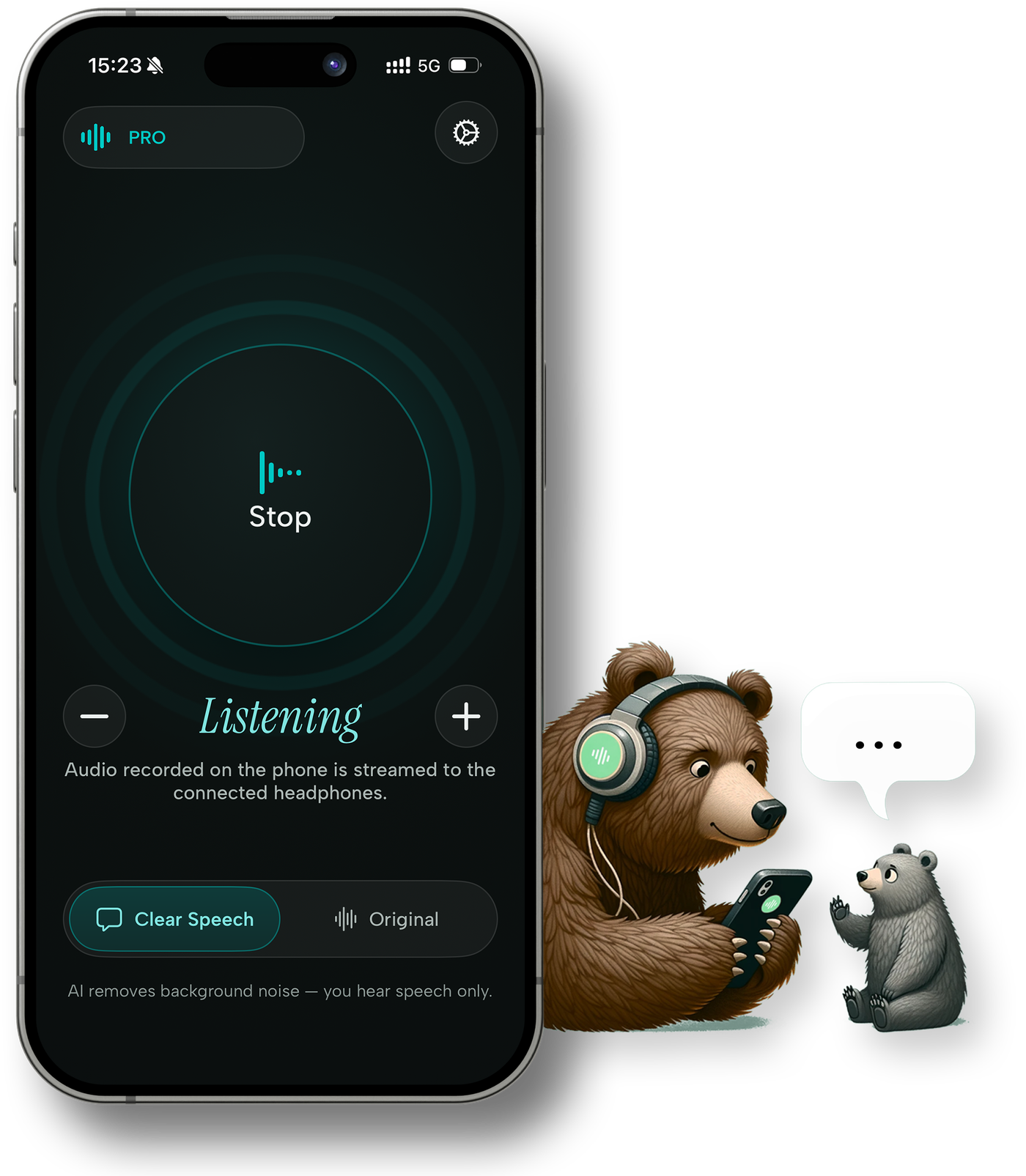
One recording, played two ways: as your ears get it — and as clir hands it to you.
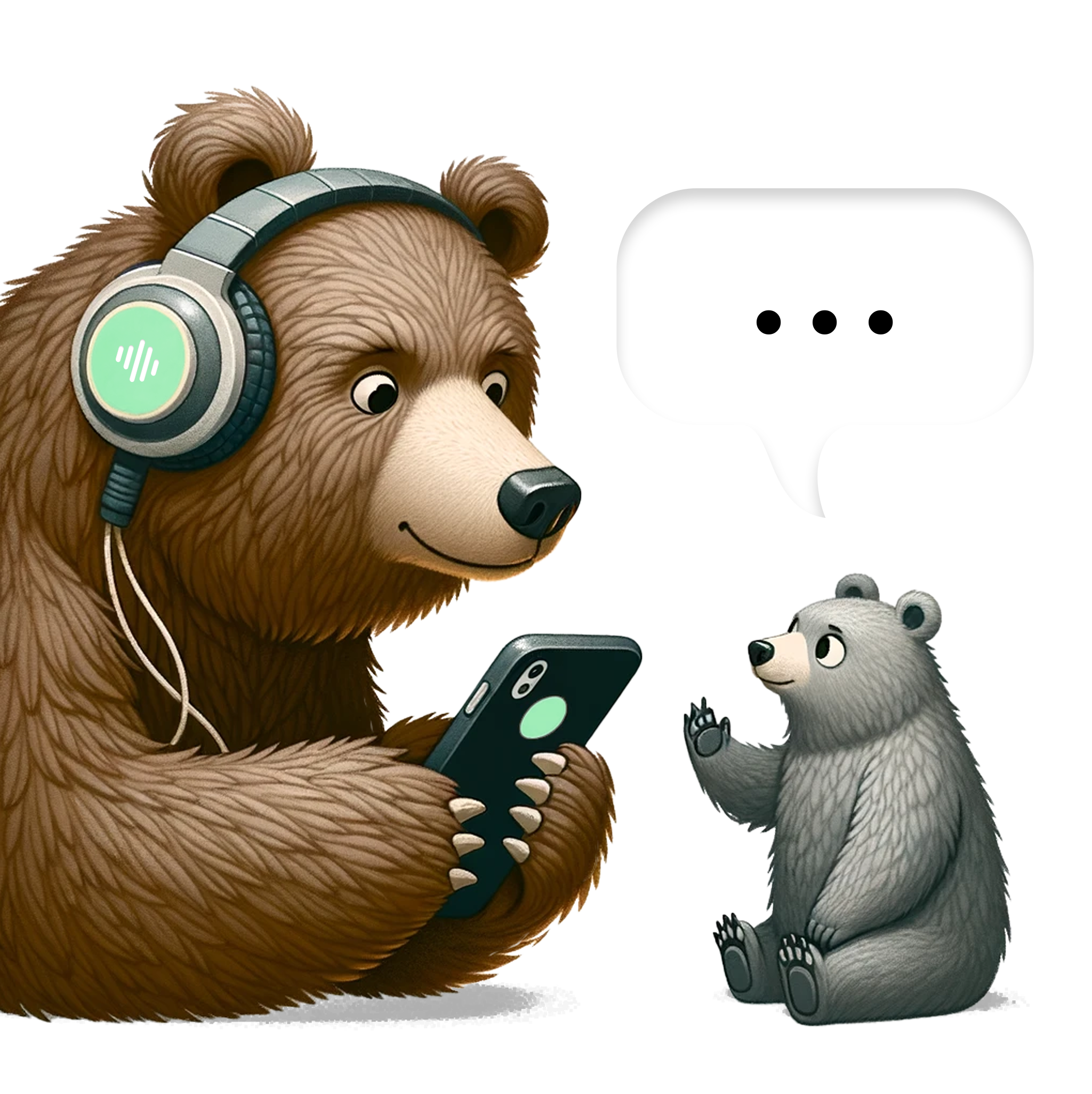

Restaurants, family dinners, meetings: hearing aids amplify the clattering plates just as loudly as the person across the table. The voices drown. You nod along, and slowly stop being part of it.
It's not your ears failing you — it's the filter. Hearing aids amplify; they don't separate speech from noise. clir does exactly that, before the sound ever reaches your ear.
No new hardware. The supercomputer in your pocket does the heavy lifting — it's 1000× more powerful than the chip in any hearing aid.
On the table, or in your hand — wherever the conversation is. Open clir Hearing.
clir detects speech and removes the background noise in real time, right on your phone. Nothing is uploaded anywhere.
The clear voice streams to your AirPods or hearing aids. Add noise cancellation, and the room goes quiet — except the people talking to you.
Follow the conversation, not the kitchen.
Hear your grandchildren over the room — not just the room.
Every word from the far end of the table, without leaning in.
Dialogue without the soundtrack fighting it.
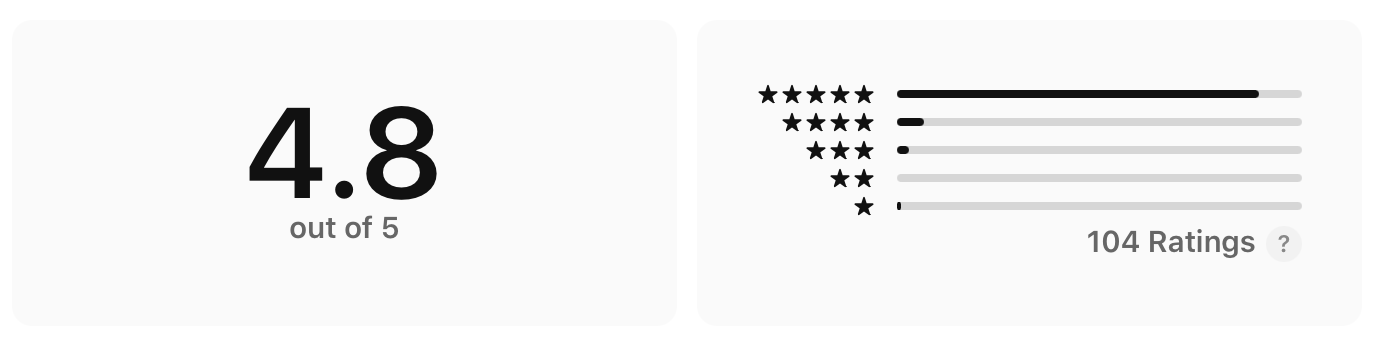
"Very impressive."
"Highly recommend, works flawlessly, great app."
"Wow! Incredible, I don't want to take off my headphones anymore."
AirPods Pro are FDA-cleared as hearing aids. Combined with clir, they become a conversation device: noise cancellation shuts the room out, clir streams the voices in.
clir streams directly to Made-for-iPhone hearing aids. Keep your fitting, your audiologist, your routine — add a noise filter they can't build in. See compatible models.
No. Any AirPods work. If you do wear Made-for-iPhone hearing aids, clir streams to them directly.
The AI runs locally on your iPhone, so latency stays imperceptibly low — you watch lips move in sync with what you hear.
Nothing leaves your phone. Processing is 100% on-device; conversations are never uploaded, stored, or used for training.
No — it complements them. clir removes the noise your hearing aids can't, in the situations they struggle with most. Many users wear both; many others use just AirPods.
Download clir Hearing and try it at the next loud table.